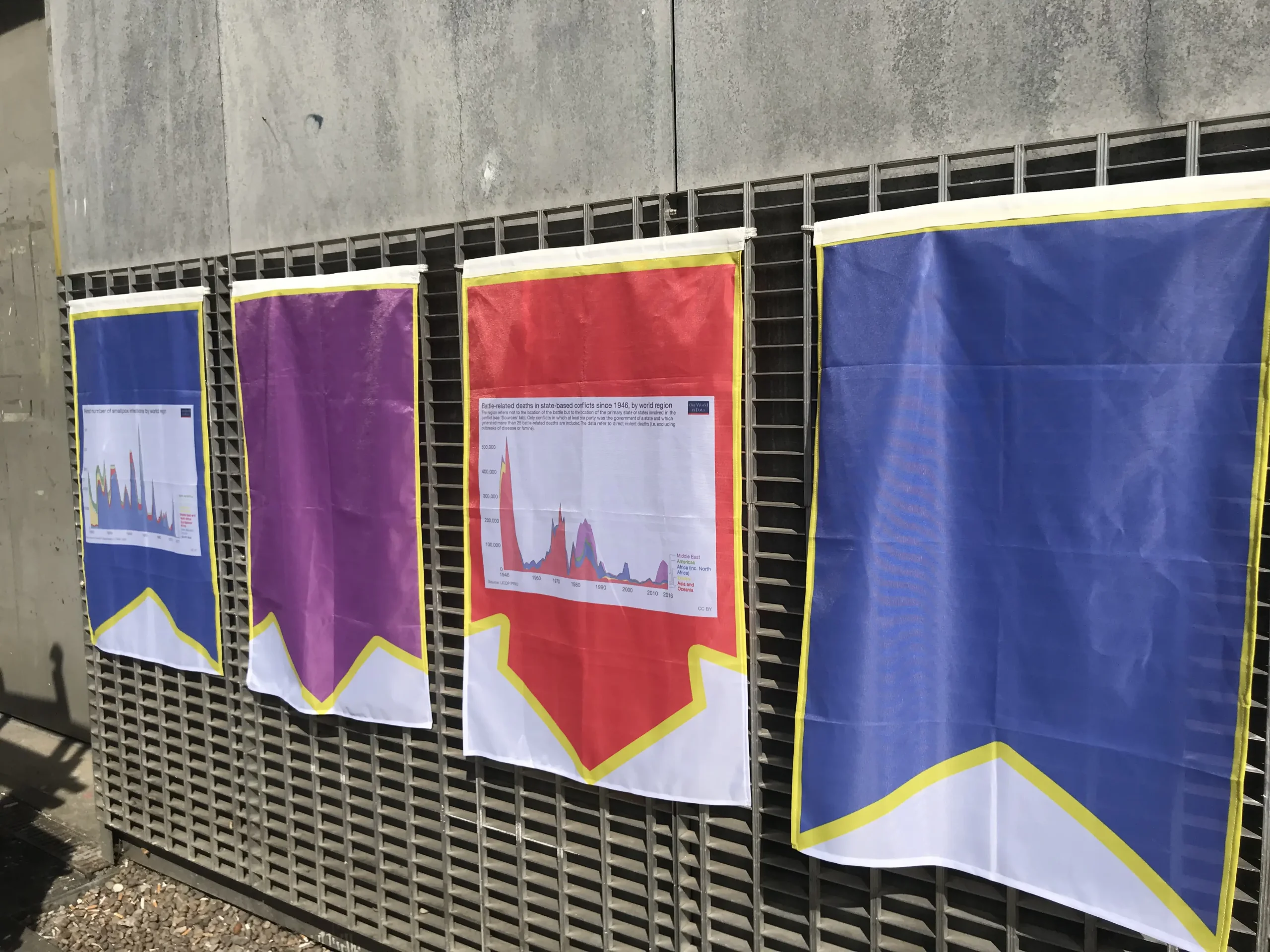
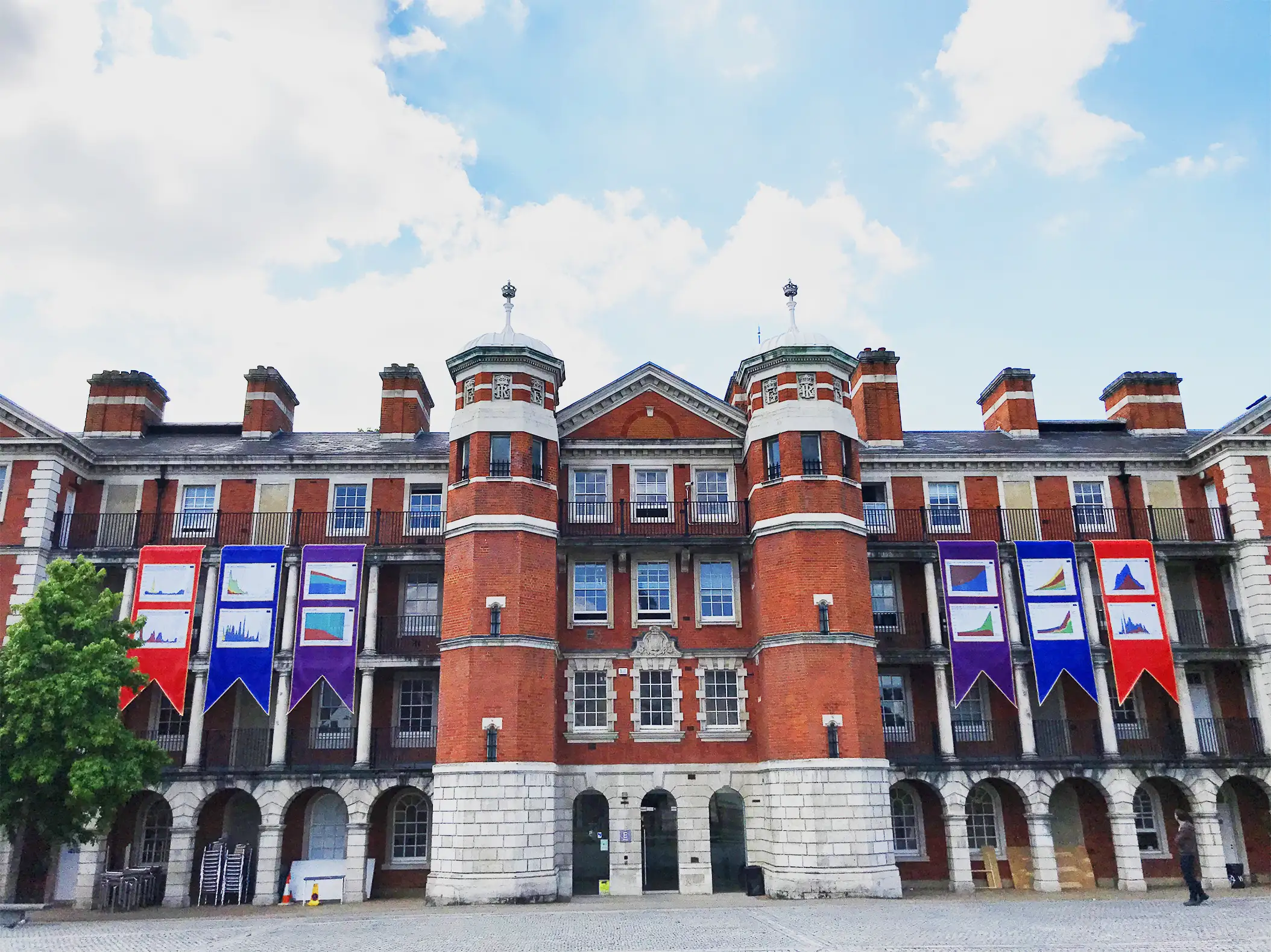
In 2019, I created a campus-wide art installation titled Virtutis Praemium – The Reward of Virtue. Using banners, flags, buntings, and postcards, the work invited viewers to reflect on the idea of virtue in the 21st century. I was fascinated by the question of how societies decide which behaviours deserve to be called ‘virtuous’ – whose actions are honoured, immortalised in bronze or stone, and raised aloft above the rest of us – and how those judgements shift across time.
The Changing Face of Virtue
What kinds of achievements do we now regard as the product of virtuous behaviour? For me, it is humanism, conditionaloptimism, and the application of science that have produced humanity’s greatest victories. In just 200 years, child mortality has dropped from 40% to 4%. Literacy has spread across the globe. Billions have been lifted out of abject poverty. Diseases like smallpox and polio have been eradicated. These transformations — the survival of children, the spread of knowledge, the alleviation of suffering – are the true rewards of virtue. Yet they are fragile, and they depend on our continued commitment to virtuous action.
Flags of Science
To communicate this, I turned to the monumental. Heraldic banners and flags, once emblems of family pride and battlehonours, became my medium. Instead of coats of arms, I emblazoned them with infographics – the modern ‘battle honours’ of science and human progress. Raised high, bright, and bold across the campus, these banners declared that the greatest victories of our age are not military, but scientific and humanitarian collaborations. This is the message of Virtutis Praemium – The Reward of Virtue.